

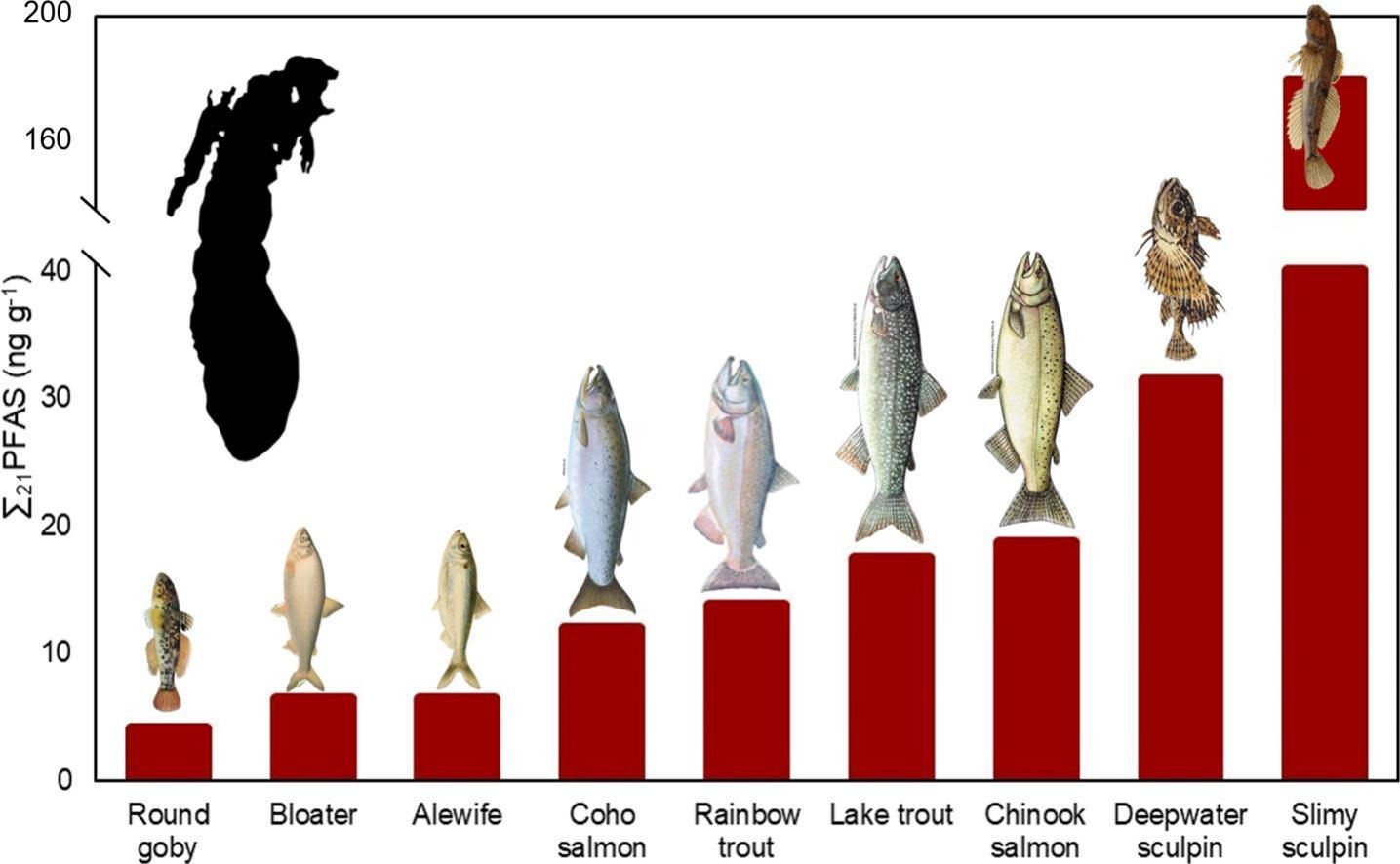
(DETROIT) -- Fish in the Great Lakes are becoming less contaminated with PFAS chemicals, raising hope that some may be safer to eat in the future, according to new research reported by Bridge Michigan.
Scientists looked at fish samples collected over several decades and found that levels of some of the most harmful PFAS chemicals have dropped significantly since manufacturers began phasing them out in the late 2000s.
PFAS, often called "forever chemicals," were widely used in industrial products for years and can build up in fish and people. Two of the most concerning types, known as PFOS and PFOA, were found at much higher levels in the past than they are today.
In Lake Erie, PFAS levels in fish peaked around 2005 and then dropped sharply by 2020. Lake Michigan has also seen a steady decline over the past decade.
Researchers say the improvement shows the lakes responded quickly once industrial use of those chemicals was reduced. However, they warn that newer PFAS chemicals are still being used, and scientists don't yet know how they may affect fish or human health over time.
State health officials continue to advise anglers to follow fish consumption guidelines. In Michigan, some fish are still considered unsafe to eat in nearly 100 bodies of water, and limits remain in place across hundreds of others.
Experts say the trend is encouraging but caution that PFAS chemicals don't break down easily and will remain in the Great Lakes environment for years to come.